
How it works
Connecting a Backup Tank to Your Whole House
By the WaterQuotes team · Published 2026-08-16 · 5 min read
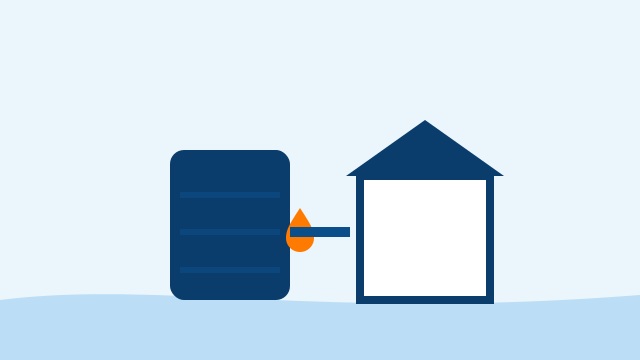
Most Johannesburg homeowners who install a backup tank start with the same idea: keep the kitchen tap running during an outage. That single-tap tie-in is cheap and quick, but it leaves your bathrooms, toilets, washing machine and garden tap all dry. A whole house water tank connection solves that — every outlet in the house draws from the same stored supply, automatically, without you having to move a hose or open a valve by hand.
Here is what the plumbing actually involves, where the costs sit, and what to watch for before you commit.
How a whole-house connection differs from a single-tap setup
A single-tap tie-in feeds one point of use directly from the tank, usually by gravity or a small inline pump. It is inexpensive but limited. A whole-house connection is different in scope: the tank feeds into your home’s main supply line, upstream of the internal distribution network, so water reaches every fixture from a single integration point.
This matters because your internal plumbing was designed around a certain incoming pressure — typically supplied by Johannesburg Water’s network. When you replace that source with a storage tank and pump, you need to replicate that pressure consistently. A pump that is undersized will give you a trickle at the shower; one that is oversized can stress older pipe joints and fittings.
The core components you will need
A functioning whole-house backup system has four main parts working together:
Storage tank. JoJo and similar poly tanks are most common. Sizing depends on how many people are in the household and how long an outage you want to cover. As a rough guide, plan for around 150–200 litres per person per day as a comfortable buffer, though your actual usage may differ — South Africans use on average about 237 litres per person per day, so confirm your own household consumption before sizing.
Pressure pump. This is what makes whole-house integration work. The pump draws water from the tank and maintains line pressure inside your home. Borehole pumps typically cost R15,000–R35,000 installed; purpose-built pressure booster pumps for tank-fed systems can be somewhat less, but get itemised quotes from installers rather than relying on any single figure.
Transfer or changeover valve. This determines when your house draws from the tank versus the municipal supply. A float valve arrangement can fill the tank passively when municipal water is available. A manual or automatic changeover valve switches the internal supply between sources. Automatic changeover is more convenient but adds cost and a point of potential failure.
Backflow prevention. South African regulations and SANS 241 (2024 edition), the national drinking-water quality standard, require that private storage not contaminate the municipal supply. A correctly installed non-return valve on the municipal inlet is non-negotiable. Your installer should include this as standard; if they do not mention it, ask directly.
The plumbing integration point
The integration point is typically at or just after your municipal meter, before the line splits to feed different parts of the house. Your plumber will cut into the main supply line and insert a tee or changeover arrangement that allows either the municipal feed or the pump outlet to supply the internal network — but not both simultaneously without proper isolation.
The exact configuration depends on your property layout, whether your geyser is on a separate line, and whether you want the backup system to feed your geyser as well. Feeding a geyser from backup supply is possible but uses stored water faster and adds complexity; some homeowners choose to exclude the geyser from the backup circuit and manage hot water separately during outages.
Backup tank-and-pump systems as a whole typically cost R20,000–R40,000, with whole-house examples coming in around R55,000 once plumbing integration, the pump, and fittings are included. Those are rough guides — your layout and the complexity of the tie-in will move the number. You can read more about how these systems work in practice on our backup water systems overview.
If you want to know what whole-house integration would actually cost on your property, it pays to get more than one opinion. Compare 3 free quotes — vetted installers, no obligation.
Pressure management and why it matters
One of the most common complaints after a DIY or poorly scoped tank installation is inconsistent pressure — strong flow downstairs, weak flow upstairs, or pressure that surges and drops as the pump cycles. These are symptoms of a pump that is not matched to the system, or a pressure vessel (accumulator tank) that is missing or incorrectly set.
A pressure vessel absorbs the small pressure fluctuations between pump cycles, which protects the pump motor and gives you steadier flow. It also means the pump is not switching on and off every few seconds every time someone opens a tap slightly. Ask your installer whether a pressure vessel is included in their quote and what its rated capacity is.
Johannesburg’s reservoir system holds roughly 27 hours of citywide storage buffer, which means most outages are measured in hours rather than days. Your backup system does not need to replace the entire municipal supply indefinitely — it needs to bridge those gaps smoothly and then refill from the municipal line when pressure returns. A well-sized system does exactly that without you noticing the transition.
What the installation process looks like
A straightforward whole-house tank connection typically takes one to two days for an experienced plumber. The sequence is roughly: site assessment and placement of the tank (tanks need a stable base and ideally some shade to slow algae growth), connection of the inlet float valve to the municipal supply, installation of the pump and pressure vessel, plumbing of the pump outlet into the main supply line, installation of the non-return valve and isolation valves, and testing of the changeover under both supply conditions.
You should expect the installer to show you how the switchover works, where the isolation valves are, and what maintenance the pump requires. If they leave without explaining those things, ask before they go.
For a broader look at what backup installations involve day to day, how backup water keeps water running covers the operational side in more detail.
Ready to move from planning to pricing? Get free quotes from local installers — no commitment, just clear numbers for your specific setup.
Choosing the right installer
Whole-house water integration is plumbing work that intersects with electrical installation (pump wiring) and, in some configurations, with Johannesburg Water’s regulations around meter connections. Use a registered plumber — check that they hold a valid plumbing licence under the South African Qualifications Authority framework — and confirm that any electrical work on the pump is done by a registered electrician who can issue a certificate of compliance.
Get at least two or three quotes and ask each installer to specify, in writing, the pump model and rated flow rate, tank size, whether a pressure vessel is included, how backflow prevention is handled, and what warranty applies to both parts and labour. Comparing itemised quotes is the fastest way to spot where one installer is cutting corners or where another is including something the others have left out.
Quick answers
Can I connect a backup tank to my whole house myself, or do I need a professional?
The plumbing integration into your main supply line requires a registered plumber — it is not a DIY job under South African regulations, and an incorrect installation can contaminate the municipal supply or void your home insurance. Pump wiring also requires a registered electrician to issue a compliance certificate. Budget for professional installation from the start.
Will the backup tank feed my geyser as well?
It can, but it is optional. Including the geyser in the backup circuit means hot water during an outage, but it also drains your stored supply faster. Some homeowners isolate the geyser from the backup circuit to extend how long other outlets remain functional. Discuss this with your installer before finalising the design.
How long will a backup tank supply a whole house?
It depends entirely on tank size and household consumption. South Africans use on average about 237 litres per person per day, though usage varies significantly by household. As a rough guide, a 2,500-litre tank serving a family of four would last roughly two to three days at average consumption — but confirm your own usage and size accordingly.
Does connecting a tank to my house require council approval?
Requirements vary, but any connection to the municipal supply line or meter is subject to Johannesburg Water's bylaws, and modifications to internal plumbing must comply with the National Building Regulations. Your registered plumber should be familiar with local requirements and can advise whether notification or approval is needed for your specific installation.
What maintenance does a whole-house backup system need?
At minimum: inspect the tank for sediment and clean it annually, check that the non-return valve is functioning, service the pump per the manufacturer's schedule (typically annually), and test the changeover mechanism every few months so you know it works before you actually need it. Neglected tanks can harbour bacterial growth, which is why the SANS 241 water quality standard matters even for private storage.
Sources & notes
Pricing reflects typical Johannesburg market ranges and is confirmed by installer quotation. References: SABS
Ready to compare? Get up to 3 quotes from vetted backup water systems installers in Johannesburg — free, no obligation.
Get 3 free quotes