
How it works
Backup Water System Diagram: Every Component Explained
By the WaterQuotes team · Published 2026-10-05 · 7 min read
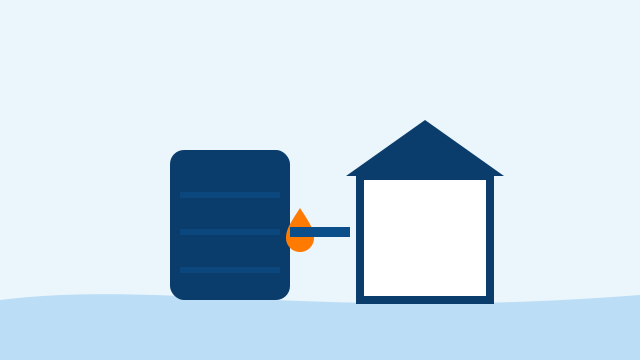
When an installer hands you a layout drawing for a backup water system, it can look like a plumber’s puzzle — boxes, arrows, and valve symbols that mean very little without a guide. This walk-through labels every standard component in plain language, explains what it does, and tells you what to watch for when comparing quotes. Nothing here is brand-specific; the same logic applies whether you’re in Durban, Cape Town, or Greater Johannesburg.
The Storage Tank
This is the visible heart of the system — usually a vertical polyethylene tank ranging from 500 litres to 5,000 litres for residential use. JoJo is the most recognised local brand, but several manufacturers produce tanks to similar specifications.
On any diagram, the tank sits at the start of the backup circuit. Its job is simple: hold clean water so that when municipal supply drops or is cut off, your household still has a reserve. Tank placement matters. Ground-level tanks need a pump to deliver pressure; elevated tanks (on a stand) can gravity-feed low-pressure applications like toilets and taps, though pressure is rarely sufficient for showers or appliances without a pump.
The tank connects to municipal supply through a fill line — typically a 25 mm or larger pipe — so it refills automatically whenever the mains are running. For a deeper look at how this fits into a complete home layout, the backup water systems overview covers sizing, materials, and placement decisions in full.
The Float Valve (Ball Valve)
At the top of the tank, a float valve does the same job as the one inside your toilet cistern: it opens when the water level drops and closes when the tank is full, preventing overflow. On a diagram it appears as a small symbol inside or just above the tank.
A correctly sized float valve is critical. Too small and the tank fills slowly; a faulty one left unchecked can overflow continuously — wasting water and potentially damaging the surrounding area. Some installers fit a secondary overflow pipe as a backup, which should exit at a visible point so you notice if the float valve fails.
The Booster Pump
Ground-level tanks produce little to no usable pressure on their own. A booster pump draws water from the tank and delivers it to your household at a pressure that matches what you’d expect from the mains — typically between 200 and 400 kPa for most homes.
On a diagram, the pump appears between the tank outlet and the rest of the house circuit, usually with a non-return (check) valve immediately after it to prevent backflow. Pump sizing is matched to flow rate (litres per minute) and the height the water must travel. An undersized pump means weak pressure at the tap; an oversized pump wastes electricity and can stress pipework.
Borehole systems use a different pump type (submersible), but for tank-based backup the centrifugal surface pump or pressure pump is standard. The article how backup water keeps water running during outages explains the pump’s role in day-to-day interruptions.
The Pressure Vessel (Pressure Tank / Accumulator)
If you’ve seen a small steel or fibreglass cylinder in a pump installation, that’s the pressure vessel. It contains a rubber bladder pre-charged with air. As the pump fills the vessel, water compresses the bladder; when a tap opens, the stored pressure pushes water out without the pump needing to start immediately.
The practical benefit: the pump doesn’t cycle on and off every time someone runs water for two seconds. Frequent short cycling shortens pump motor life significantly. On a diagram, the pressure vessel sits just downstream of the pump, before the house distribution line.
The Switchover Valve (and Bypass)
This is the component most homeowners ask about. A switchover valve — sometimes a manual ball valve arrangement, sometimes an automatic changeover unit — determines which source feeds the house at any moment: municipal mains or the backup tank.
A basic manual layout uses two or three ball valves positioned so you can isolate one supply and open the other. An automatic changeover unit senses pressure loss on the mains and switches to the backup circuit without any action on your part. Both approaches appear regularly in installer diagrams; the automatic version costs more but requires no one to be home when an outage occurs.
Alongside the switchover, a bypass line allows flow to continue if the pump or pressure vessel needs servicing. Without a bypass, any maintenance shuts down water to the entire house. Any reputable installer’s diagram should include one. The article on connecting a backup tank to a whole-house system walks through how these valves interact with your existing pipework.
If you're comparing installer quotes and want to check whether each layout includes all these components, it helps to have vetted professionals working from the same brief. Compare 3 free quotes — vetted installers, no obligation.
Isolation Valves and Non-Return Valves
Scattered through any good diagram are two small but important fittings:
- Isolation valves (gate or ball valves) placed before and after each major component — pump, pressure vessel, tank inlet — so individual parts can be removed or serviced without draining the whole system.
- Non-return valves (check valves) prevent water from flowing backwards. One after the pump protects it from backflow when the mains pressure is higher than the backup circuit. One on the tank fill line prevents tank water from contaminating the municipal supply — a requirement under SANS 241 (2024 edition), which sets South African drinking-water quality standards.
If a diagram doesn’t show non-return valves on both the fill line and the pump outlet, ask the installer why before accepting the quote.
How It All Connects: A Simplified Component Table
| Component | Position in circuit | Primary function |
|---|---|---|
| Storage tank | Start of backup circuit | Stores reserve water |
| Float valve | Tank inlet | Controls fill level, prevents overflow |
| Booster pump | Tank outlet | Delivers usable pressure |
| Pressure vessel | Downstream of pump | Reduces pump cycling, smooths pressure |
| Non-return valves | Fill line & pump outlet | Prevents backflow and contamination |
| Switchover valve | Before house distribution | Selects mains or backup supply |
| Bypass line | Around pump/vessel | Allows servicing without cutting supply |
| Isolation valves | Before/after each component | Enables individual component maintenance |
Reading an Installer’s Diagram
When a quote arrives with a layout drawing, run through this checklist:
- Is the tank sized for your household? A rough guide is one to two days of your daily usage as a minimum reserve — but confirm the exact figure with your installer.
- Is there a non-return valve on the fill line? This is not optional under SANS 241.
- Does the diagram show a bypass around the pump? If not, ask for one.
- Where are the isolation valves? There should be at least one before and after the pump and pressure vessel.
- Is the switchover manual or automatic? Neither is wrong, but you need to know which you’re buying.
- Where does overflow from the float valve exit? It should be visible and directed away from the foundation.
The article on switching between municipal and tank supply goes into detail on the switchover step specifically, which is often where homeowners have the most questions during installation.
Once you know what a complete system looks like on paper, it's much easier to spot a quote that's cutting corners. Get matched with three installers — vetted installers, no obligation.
What the Diagram Doesn’t Show
No flat layout drawing captures everything. It won’t show the condition of your existing pipework, whether your roof or wall can carry a tank stand, or local ground conditions if you’re burying supply lines. These are the details a site visit reveals — and any installer quoting without one is guessing on at least some of those variables.
Prices for complete tank-and-pump backup systems in Johannesburg typically fall between R20,000 and R40,000 for a single-tank setup, with whole-house configurations around R55,000 — though every site is different and those figures should be treated as a starting reference, not a firm budget. If you’re outside Johannesburg, treat those as a rough guide only and use quotes to establish what applies locally.
Knowing how to read the diagram means you can have an informed conversation with any installer, understand what you’re paying for, and spot the difference between a thorough plan and one that skips components your system genuinely needs.
Quick answers
Do I need a pressure vessel, or can I just run the pump directly to my taps?
You can run without a pressure vessel, but the pump will cycle on and off every time a tap opens briefly, which shortens motor life. A pressure vessel is a modest upfront cost that meaningfully extends the life of the pump. Most installers include one as standard — if a quote omits it, ask why.
What does SANS 241 require for a backup water system?
SANS 241 (2024 edition) is South Africa's drinking-water quality standard. In the context of a backup tank installation, the most relevant requirement is preventing cross-contamination between tank water and the municipal supply — which is why a non-return valve on the fill line is mandatory, not optional. For full compliance details, your installer should reference the standard directly, and you can consult the SABS for the published document.
Can I fit an automatic switchover to an existing manual system?
In most cases yes, as a retrofit. An automatic changeover unit replaces or supplements the manual valve arrangement and needs an electrical connection. The cost and complexity depend on how the existing system is plumbed, so a site assessment is needed before quoting.
How do I know what tank size to put on my diagram?
Start with your household's daily water use and multiply by how many days of reserve you want. South Africans use on average about 237 litres per person per day, so a family of four might target 2,000–4,000 litres for a two-day reserve. That's a starting point; your installer should adjust the figure based on your actual usage patterns and available space.
Why does the bypass line matter if I can just call a plumber when the pump fails?
Without a bypass, servicing the pump means shutting off water to the entire house for the duration of the work — which could be hours or longer if parts need to be sourced. A bypass line routes flow around the pump so you can isolate it for maintenance while the house stays supplied from the mains. It's a small addition to any diagram but a significant convenience when something eventually needs attention.
Sources & notes
Pricing reflects typical Johannesburg market ranges and is confirmed by installer quotation. References: SABS
Ready to compare? Get up to 3 quotes from vetted backup water systems installers in Johannesburg — free, no obligation.
Get 3 free quotes