
How it works
Backup Water for a Granny Flat or Garden Cottage: One System or Two?
By the WaterQuotes team · Published 2026-11-19 · 6 min read
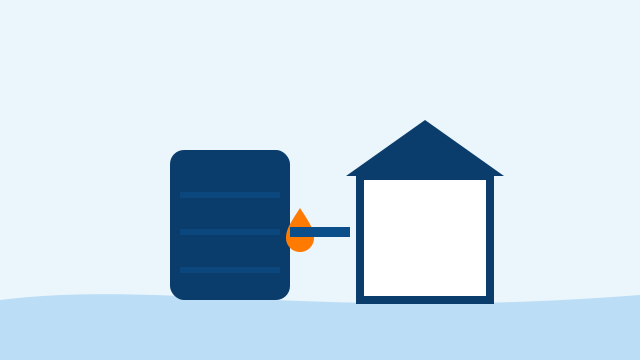
Adding a granny flat or garden cottage to your property is a sensible way to generate rental income or house family — but the moment you have two separate dwellings, your backup water planning gets more complicated. Do you run a single system for both structures, or give the cottage its own tank and pump? There is no universal answer, and the decision turns on a handful of practical factors that any decent installer will walk you through before quoting.
Why the question matters more than it looks
Most homeowners think of backup water as a single tank bolted to the side of the house. When a cottage enters the picture, that mental model breaks down. You now have two sets of fixtures, potentially two different users with different habits, and quite possibly a legal obligation to keep consumption accountable if the tenant pays for their own utilities. Getting the system wrong means either the cottage runs dry during an outage or you’ve spent money on a second setup you didn’t need.
Understanding how much water a typical household actually uses is a good starting point. South Africans use roughly 237 litres per person per day on average — well above the world average — so even a one-bedroom cottage adds meaningful daily demand to any shared tank.
The shared-system option: when it makes sense
Sharing one tank and pump across both dwellings is the simpler and usually cheaper starting point. It works well when:
- The pipe run is short. If the cottage is within 20–30 metres of the main tank and the terrain is relatively flat, pressure loss along the shared line is manageable with a correctly sized pump.
- Both dwellings are owner-occupied or used by family. When you’re not metering separately, consolidated storage is easier to manage and maintain.
- The combined daily demand fits within one tank’s capacity. A 5 000-litre tank is a common size for a single household; two dwellings may need 10 000 litres or more for the same number of outage days of autonomy.
The broad guidance on sizing and configuration for shared setups is covered in detail on the backup water systems pillar page, which is worth reading before you start gathering quotes.
The separate-system option: when it makes sense
A dedicated tank and pump for the cottage becomes more attractive when:
- The cottage is far from the main house. Long pipe runs cause friction losses that a shared pump has to overcome. Beyond roughly 40–50 metres — and especially with elevation changes — a second pump serving a local tank at the cottage is often more efficient than trying to push water harder from the main tank.
- You have a paying tenant. If the tenant pays for water independently, you need a way to measure their consumption accurately. A separate system makes sub-metering straightforward and avoids disputes.
- The cottage has high-pressure fixtures or a geyser on a separate circuit. Pressure and flow requirements that differ significantly between the two buildings are easier to satisfy with independent systems.
- Rental compliance matters to you. Some landlords prefer the cleaner audit trail that a standalone system provides, particularly as water tariffs increase and tenants become more aware of their usage rights.
If you’re renting the cottage out, the article on backup water for renters explains the tenant-side perspective — useful context when you’re the one setting up the system they’ll rely on.
Pressure and pump sizing: the most common mistake
Undersizing the pump for a shared run is the error installers see most often in dual-dwelling retrofits. Homeowners extend an existing backup system to serve the cottage without recalculating the pump’s duty point — the combination of flow rate and head pressure the pump must deliver at the furthest fixture. The result is weak flow at the cottage tap, particularly when both dwellings draw simultaneously.
If you’re sharing one system, ask the installer to calculate the system curve for the full pipe run, including any height difference between the tank and the cottage’s highest outlet. If you’re installing two systems, confirm that both pumps are matched to their respective pipe runs rather than just copied from a standard spec.
| Factor | Shared system | Separate system |
|---|---|---|
| Upfront cost | Lower (one tank, one pump) | Higher (duplicated hardware) |
| Long pipe run (>40 m) | Can be problematic | Each pump is local — simpler |
| Tenant sub-metering | Requires added metering hardware | Straightforward |
| Maintenance | One point of failure covers both | Failure affects only one dwelling |
| Scalability | Harder to expand later | Each system sized independently |
If you're not sure which configuration suits your property layout, talking to an installer who's done dual-dwelling setups before makes a real difference. Compare 3 free quotes — vetted installers, no obligation.
Connecting the cottage: pipe routing and integration
The physical routing of pipework between the main house and cottage is often underestimated in both complexity and cost. Underground runs need appropriate pipe class and depth to avoid UV degradation and accidental damage. Any penetrations through boundary walls or under driveways add labour. If the existing supply line to the cottage is narrow — 15 mm LDPE is common in older properties — it may restrict flow even if the pump is powerful enough.
For homeowners who have already fitted a tank at the main house and want to extend service to the cottage, the practical guide on connecting a backup tank to the whole house covers the integration steps that also apply when the ‘whole house’ includes an outbuilding.
Drinking-water quality is worth raising with your installer regardless of configuration. Any water stored in tanks and distributed through additional pipework should still meet SANS 241 (2024 edition), the South African drinking-water quality standard. If the cottage shares tank water used for drinking, ask the installer whether a point-of-use filter makes sense at that end.
What to budget — and why you need quotes
As a Johannesburg reference point, complete backup tank-and-pump systems typically run R20,000–R40,000 for a standard residential setup, with whole-house examples around R55,000. A second, smaller system for a cottage would usually be less, depending on tank size and pump specification — but pipe-run costs, groundwork and metering hardware vary too much to give a reliable number without a site visit.
The gap between a well-designed shared system and two independent systems can be surprisingly small once you factor in the additional pipework and pump upgrades needed to make a shared setup work over a long run. That’s precisely why getting competing quotes — with each installer assessing both options — gives you a clearer picture than any rule of thumb can.
Ready to see what the actual numbers look like for your property? Get your free installer quotes — up to three vetted specialists, no obligation.
Questions to ask before you decide
Before committing to either approach, make sure any installer you consult addresses these points:
- What is the actual pipe distance and height difference between the main tank position and the cottage’s highest outlet?
- Will the pump duty point support simultaneous draw from both dwellings under the shared option?
- If separate systems are recommended, what size tank covers the cottage’s realistic daily demand for a three-day outage?
- How will sub-metering be implemented if the tenant pays for their own water?
- What water quality monitoring, if any, is recommended for stored water used for drinking in both dwellings?
The answers will vary by property, which is exactly why a site visit is essential before any installer gives you a final price. A system designed around the specifics of your plot will serve both your household and your tenant far better than one sized from a catalogue.
Quick answers
Can I just extend my existing backup tank to supply the cottage?
Yes, but it depends on the pipe run length, the height difference between the tank and the cottage, and your existing pump's capacity. If the run is short and the pump has spare capacity, extension is often straightforward. For longer runs or significant elevation changes, the installer may need to upsize the pump or recommend a local tank at the cottage instead.
Do I need to sub-meter the cottage if the tenant pays for water separately?
Not legally required at a national level, but practically speaking it's the only fair way to split consumption if you're billing separately. A pulse-output water meter on the cottage's supply line feeds into a data logger or smart home system and gives both you and the tenant an auditable record. Ask your installer to include this in the quote if you have a paying tenant.
Does backup water stored in a tank have to meet SANS 241?
SANS 241 (2024 edition) is the benchmark for South African drinking water quality, and water served to any occupant — including a tenant in a cottage — should meet it. Municipal supply typically arrives compliant, but storage in tanks can introduce contamination if tanks aren't sealed, cleaned regularly, and plumbed correctly. Discuss point-of-use filtration with your installer if the stored water will be used for drinking.
Is a separate system for the cottage significantly more expensive?
Not always, once you factor in the pump upgrades and extra pipework that a long shared run often requires. Using Johannesburg figures as a reference point, the cost difference between a correctly specified shared system and a small dedicated cottage system can be modest. Get quotes for both options side by side — that's the only reliable way to compare for your specific property layout.
What tank size is typically right for a one-bedroom cottage?
A rough guide for a one-bedroom cottage occupied by one or two people would be 2 500–5 000 litres, aiming to cover two to three days of typical use during an outage. Actual sizing depends on how many people use the cottage, their daily habits, and how long outages in your area tend to last. Your installer should calculate this from your specific circumstances rather than applying a standard size.
Sources & notes
Pricing reflects typical Johannesburg market ranges and is confirmed by installer quotation. References: SABS
Ready to compare? Get up to 3 quotes from vetted backup water systems installers in Johannesburg — free, no obligation.
Get 3 free quotes